The benefits of a bilingual brain
March 12, 2026
By Mia Nacamulli
Hablas español? Parlez-vous français? 你会说中文吗?
If you answered “sí,” “oui,” or “会” and you're watching this in English, chances are you belong to the world’s bilingual and multilingual majority.
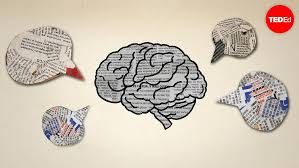
Beyond easier travel or watching movies without subtitles, knowing two or more languages can actually shape how your brain looks and works.
What Does It Mean to “Know” a Language?
Language ability is typically measured in four parts:
- Speaking (active)
- Writing (active)
- Listening (passive)
- Reading (passive)
A balanced bilingual has near-equal abilities across all four areas, but most bilinguals use their languages in different proportions depending on context and need.
Depending on how and when someone learns their languages, they may fall into one of three broad categories:
- Compound bilinguals — learn two linguistic codes simultaneously with one shared set of concepts.
Example: Gabriella, who immigrates from Peru to the U.S. at age two, learns English and Spanish together as she discovers the world. - Coordinate bilinguals — learn two languages in different environments with separate sets of concepts.
Example: Gabriella’s teenage brother learns English at school while speaking Spanish at home. - Subordinate bilinguals - learn a second language by filtering it through their first.All three types can become fully proficient, regardless of accent or pronunciation.
What Happens in the Bilingual Brain?
Advances in brain imaging show that bilingualism affects the brain in fascinating ways.
- The left hemisphere is more analytical and logical.
- The right hemisphere is more emotional and social
- Children use both hemispheres more flexibly when learning languages, supporting the critical period hypothesis.
This suggests that learning a language in childhood may give a more holistic grasp of its social and emotional context. Adults, however, often show less emotional bias and a more rational approach when using a second language.
Cognitive Benefits of Bilingualism
Being multilingual can lead to:
- Higher grey matter density (more neurons and synapses)
- More brain activity in regions used for switching languages
- Strengthening of the dorsolateral prefrontal cortex, which supports:
- Executive function
- Problem-solving
- Task switching
- Filtering irrelevant information
- Delayed onset of Alzheimer's and dementia
-
Lifelong Learning
Even if you didn’t learn a second language as a child, it’s never too late. Moving from “Hello” to “Hola,” “Bonjour,” or “你好” gives your brain a workout that can have lifelong benefits
Click Here for the video